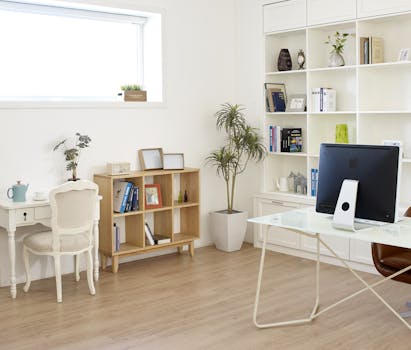

Ever stared at a corner of your home, a spare nook, or even a generously sized closet, and thought, “This could be something more”? For many of us navigating the evolving landscape of work, the dream of a dedicated home office feels just out of reach, especially when square footage is at a premium. It’s a common conundrum: you need a space to focus, to create, to conquer your to-do list, but your dwelling is anything but expansive. The question isn’t whether you can have a functional home office in a small room; it’s how to unlock its full potential without feeling like you’re working in a glorified broom closet. Let’s dive into the nuanced strategies and unexpected solutions for transforming those tight quarters into your productivity powerhouse.
Rethinking “Office”: Beyond the Desk and Chair
The traditional image of an office often conjures a sprawling desk, multiple monitors, and filing cabinets. When we talk about how to build a functional home office in a small room, the first step is a radical rethinking of that image. Is a massive desk truly necessary? Can essential storage be integrated vertically? Often, the limitations of a small space force us to be more innovative. It’s about prioritizing what you absolutely need to be productive and finding clever ways to incorporate it.
Think about the core functions you require: a comfortable place to sit, a surface to work on, adequate lighting, and a system for organizing your essentials. These are the building blocks, and in a small space, each element must serve a purpose, ideally multiple purposes.
#### The Vertical Frontier: Walls as Your Allies
When horizontal space is scarce, it’s time to look up. Walls are often the most underutilized assets in small rooms. Consider:
Floating Shelves: These offer crucial storage for books, files, and decorative items without consuming floor space. They create an illusion of openness.
Wall-Mounted Organizers: From pegboards for art supplies and tech accessories to letter sorters and magnetic strips, these keep your desk clear and your necessities within easy reach.
Vertical File Systems: Instead of bulky drawer units, opt for wall-mounted file holders or tiered desk organizers that go upwards.
My own journey into maximizing small spaces involved a steep learning curve with wall storage. I was amazed at how much I could declutter once I fully embraced vertical solutions. It’s not just about adding shelves; it’s about creating a strategic visual hierarchy.
Furniture That Fights for Space
Choosing the right furniture is paramount when you’re figuring out how to build a functional home office in a small room. You can’t afford bulky, single-purpose items. Multifunctionality is your mantra.
#### Clever Desks for Compact Zones
Wall-Mounted Fold-Down Desks: These are game-changers. When not in use, they fold neatly against the wall, disappearing entirely. They’re perfect for minimalists or rooms that serve multiple functions.
Console Desks: Slim and elegant, these desks offer a work surface without overwhelming the space. They can often double as a console table when your workday is done.
Corner Desks: Sometimes, the most overlooked space is a corner. A well-designed corner desk can maximize usable surface area and create a defined work zone.
#### Seating That Doesn’t Shrink the Room
Your chair needs to be comfortable, but also proportional. Avoid oversized executive chairs. Look for:
Ergonomic Task Chairs with a Small Footprint: Many modern designs are sleek and supportive without being bulky.
Movable Stools or Ottomans: These can tuck under a desk when not in use and serve as extra seating or footrests.
Lighting: The Unsung Hero of Productivity
In a small room, lighting is more than just illumination; it’s a mood-setter and a space-expander. Poor lighting can make a small room feel even more claustrophobic and hinder productivity.
#### Layering Your Light Sources
Natural Light is King: Position your desk near a window if possible. The psychological benefits are immense.
Task Lighting: A good desk lamp is non-negotiable. Choose one that is adjustable and provides focused light without glare.
Ambient Lighting: Consider a strategically placed floor lamp or wall sconces to provide overall illumination and create a warm atmosphere.
I’ve found that strategically placed mirrors can also work wonders with lighting, bouncing natural light deeper into the room and creating a sense of greater depth. It’s a simple trick that has a significant impact.
Defining Your Zone: Creating Boundaries Without Walls
One of the biggest challenges in a small room is making it feel like a distinct workspace, not just a corner of your living area that happens to have a laptop.
#### Visual Cues for Separation
Rugs: A small rug placed under your desk and chair can visually demarcate your office area.
Color Blocking: Painting an accent wall behind your desk or using a different paint color for that section of the room can create a psychological boundary.
Screens or Room Dividers: For more defined separation, consider a folding screen or even a tall bookshelf that acts as a partial divider.
Is it possible to create a sense of privacy and focus without building actual walls? Absolutely. It’s about employing subtle design elements that guide the eye and the mind.
Streamlining Your Setup: The Art of Essentialism
When you’re focusing on how to build a functional home office in a small room, the temptation to fill every available inch with “stuff” is real. Resist it. Embrace the principle of essentialism.
#### Decluttering and Organization Strategies
Go Digital: Scan important documents and reduce paper clutter.
Cable Management: Invest in cable clips, ties, and sleeves to keep wires tidy and out of sight. Tangled cords are a major offender in small spaces.
Multipurpose Tools: Can your printer also scan? Can your notebook be a digital tablet? Look for items that serve multiple functions.
Thinking critically about what truly adds value to your workday is key. If an item doesn’t directly contribute to your productivity or well-being, it’s likely taking up precious space.
Final Thoughts: Embracing the Potential
Building a functional home office in a small room isn’t about compromise; it’s about intelligent design and a keen understanding of your needs. By embracing vertical space, choosing furniture wisely, optimizing lighting, defining your zone, and ruthlessly decluttering, you can transform even the most modest nook into a highly productive and inspiring workspace. The real magic lies not in the size of the room, but in the thoughtful execution of its design.
So, as you stand in your compact space, ready to begin this transformation, ask yourself: What is the one* essential element that will elevate this small room into your personal productivity sanctuary?