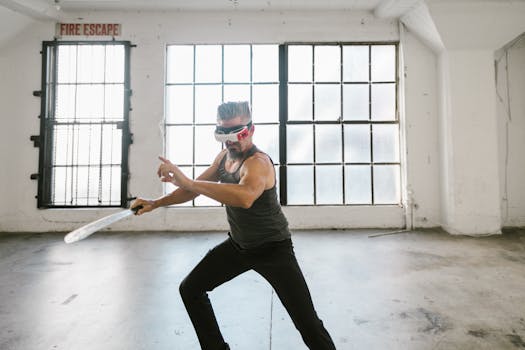

Remember that feeling of being utterly captivated by a documentary, where the world on screen felt almost tangible? Now, imagine stepping inside that world, interacting with its elements, and experiencing concepts firsthand. This is the transformative power of incorporating virtual reality into learning experiences. For too long, education has relied on abstract representations and passive consumption. VR, however, offers a paradigm shift, moving us towards active, embodied learning that resonates on a far deeper cognitive level. It’s not merely about adding a technological gimmick; it’s about fundamentally re-architecting how knowledge is acquired and retained.
The Cognitive Leap: Why VR Resonates So Profoundly
The human brain is hardwired for experience. We learn best by doing, by sensing, and by engaging with our environment. Traditional educational methods, while foundational, often struggle to replicate this experiential learning. Incorporating virtual reality into learning experiences bridges this gap by providing a simulated environment that closely mimics real-world scenarios. This immersion triggers a more robust engagement of our neural pathways, leading to enhanced memory formation and comprehension.
Think about learning anatomy. Dissecting a virtual frog, manipulating its organs, and seeing their spatial relationships in 3D is a vastly different experience than studying diagrams in a textbook. This kinesthetic and visual reinforcement solidifies understanding in ways that rote memorization simply can’t achieve. Furthermore, the emotional engagement fostered by VR can significantly boost motivation and interest in subjects that might otherwise seem dry or inaccessible.
Strategic Integration: Moving Beyond Novelty
While the novelty of VR is undeniable, its true value lies in strategic implementation. Simply dropping students into a VR headset without a clear pedagogical purpose is unlikely to yield lasting benefits. Effective incorporation of virtual reality into learning experiences requires careful planning, curriculum alignment, and a deep understanding of both VR technology and learning theory.
This isn’t about replacing traditional teaching methods entirely, but rather about augmenting them. VR can serve as a powerful tool for:
Experiential Exploration: Allowing students to visit historical sites, explore distant galaxies, or conduct dangerous experiments in a safe, controlled environment.
Skill Development: Practicing complex procedures in fields like medicine, engineering, or aviation without real-world consequences.
Empathy Building: Stepping into the shoes of others to understand different perspectives and foster social-emotional learning.
Conceptual Visualization: Making abstract concepts, like molecular structures or economic models, tangible and interactive.
Designing for Impact: Key Considerations for VR Integration
When we talk about successfully incorporating virtual reality into learning experiences, several critical factors come into play. It’s more than just acquiring headsets; it’s about thoughtful design and deployment.
#### Fostering Active Participation Over Passive Observation
One of the most significant advantages of VR is its ability to move learners from passive recipients of information to active participants. This means designing VR modules that encourage exploration, problem-solving, and decision-making. Learners should be prompted to interact with the virtual environment, manipulate objects, and draw conclusions based on their experiences. This active engagement is crucial for deeper understanding and retention.
#### Ensuring Pedagogical Alignment and Learning Objectives
Before embarking on VR integration, it’s imperative to clearly define the learning objectives. What specific knowledge or skills are you aiming to impart? How will the VR experience directly contribute to achieving these objectives? Without this alignment, VR can become a distracting technological flourish rather than a powerful educational tool. The content within the VR environment must be accurate, relevant, and designed to facilitate the targeted learning outcomes.
#### Addressing Accessibility and Technical Hurdles
While VR technology is rapidly advancing, accessibility and technical infrastructure remain crucial considerations. Not all learners may have equal access to VR hardware, and schools may face budgetary constraints. Furthermore, technical support, content updates, and the potential for motion sickness (though diminishing with newer technologies) need to be proactively addressed. Thoughtful planning regarding hardware distribution, technical training for educators, and robust troubleshooting protocols is essential for seamless integration.
#### Measuring Effectiveness Beyond Engagement Metrics
Engagement is a vital component, but it’s not the sole measure of success. When incorporating virtual reality into learning experiences, we must also focus on assessing actual learning outcomes. This might involve pre- and post-assessments, performance tracking within the VR environment, and traditional evaluation methods to gauge the transfer of knowledge and skills to real-world applications. Analyzing how VR impacts cognitive load and knowledge acquisition is key to refining future implementations.
The Future is Experiential: Embracing VR for Deeper Learning
The path to effectively incorporating virtual reality into learning experiences is one of continuous evolution and thoughtful design. It demands a shift in mindset from simply delivering information to creating environments where learners can truly experience knowledge. As technology matures and educators become more adept at leveraging its potential, VR will undoubtedly play an increasingly pivotal role in shaping the future of education.
It’s not about whether VR can enhance learning, but how we strategically harness its power to create more profound, memorable, and impactful educational journeys for every student. The question for educators and institutions today is not if they will embrace VR, but when and how they will best unlock its transformative potential.